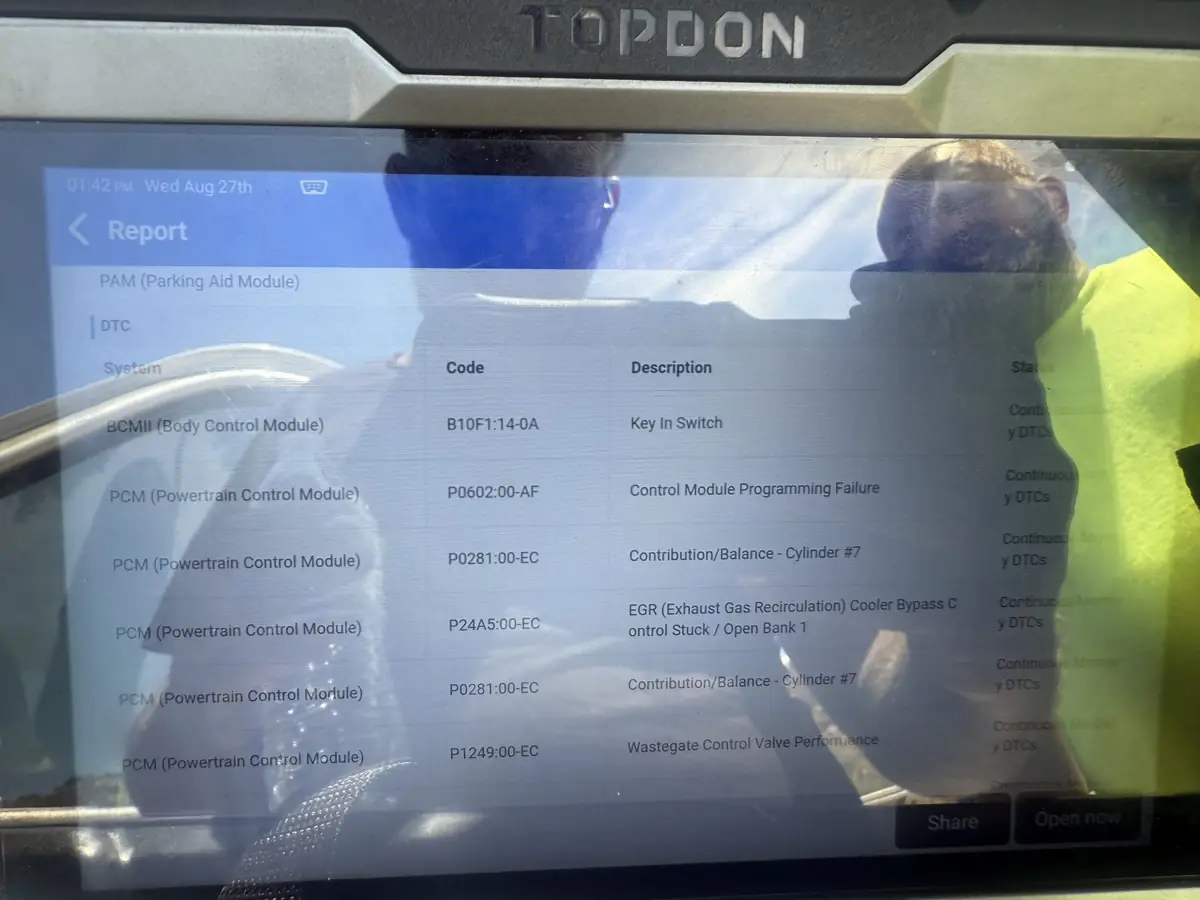
In May 2026, a call came in from Nuevo about a Ford F-350. A bolt on the crankcase vent filter, at the back of the valve cover, had snapped off. The owner needed it out before the filter could go back on.
Small service jobs matter on these trucks. Ford told federal safety regulators that about half the under hood fire reports it reviewed came shortly after a fuel filter change.1 The 6.7 Power Stroke's best known problems are the CP4.2 fuel pump, fuel filter leaks, early turbos, early exhaust sensors and fuel in the oil. Which ones you face depends on the model year.
What to Know
- Every 6.7 runs a Bosch CP4.2 pump. Ford recalled 295,449 trucks from 2020 to 2022 over it.3
- That recall is a software update, not a new pump. Some trucks got it wrong and were recalled again in 2026.45
- Federal regulators opened a probe in May 2024 into fuel filter housing leaks on 2015 to 2021 trucks.2
- Ford's filter interval is 30,000 miles, or 15,000 if you tow, idle a lot or drive stop and go.1
- The 2011 and 2012 trucks carry the longest list, from turbo bearings to exhaust temperature sensors.67
Find Your Generation Before You Read Anything Else
The 6.7 has come in three generations so far. They run 2011 to 2014, 2015 to 2019, and 2020 on.8 A problem that haunts a 2011 may never show up on a 2021, so start with the year on your registration.
| Model Years | What to Watch | Recall or Federal Probe |
|---|---|---|
| 2011 to 2014 | Turbo bearings on 2011 and 2012, NOx and exhaust temperature sensors, early radiators, glow plug tips on early chassis cabs78 | Recall 13S10 on ambulance trucks and recall query RQ14-0056 |
| 2015 to 2019 | Secondary fuel filter housing leaks, CP4.2 pump wear27 | Probe PE24-0142 |
| 2020 to 2022 | The RP7 version of the CP4.2 pump, filter housing leaks through 2021, the crankcase pressure filter238 | Recall 24S78, plus a 2026 follow up recall35 |
| 2023 and newer | A harder power cut when fuel pressure drops, and a fuel injector added ahead of the EGR system18 | None on this list |
The CP4.2 Fuel Pump Can Take the Whole Fuel System With It
The CP4.2 is the high pressure pump that feeds the injectors. When one comes apart, metal can travel through the system. The repair can then mean a new pump, eight injectors, new lines and a cleaned tank.7
The 2020 to 2022 trucks got a recall for it. Ford found deposits from aged biodiesel forming on the roller parts inside the RP7 version of the pump.3 Ford moved to an updated RP8 pump with more clearance during the 2021 model year. Super Duty trucks in the recall were built from February 19, 2019 to August 23, 2021.3
Between October 2019 and November 2024, Ford logged 3,070 warranty claims tied to that pump.3 Its later review linked failure rates to biodiesel specs and to state temperatures.3 That's worth knowing in a valley where summer runs hot.
Don't expect a new pump from the recall. The fix is a computer update at a Ford dealer that adds cooling around the pump's tappets.3 Owners who already paid for a related repair may be able to get paid back under Ford's reimbursement plan.3
The warning signs are longer cranking, more engine noise, less power and a check engine light.4 Ford's recall line is 1-866-436-7332.4 In April 2026, Ford recalled 7,105 of these trucks again. The first update may not have loaded the right software.5
Fuel Filter Leaks and the Fire Probe
In May 2024, NHTSA opened a probe into 2015 to 2021 Super Duty trucks with the 6.7. It counted 27 complaints of diesel leaking from a cracked secondary fuel filter housing. Twelve of them described an engine fire.2 The filter sits close to hot engine parts, which is why a leak there is serious.2
Ford answered in November 2024. It put the reported fire rate at 0.11 per 1,000 trucks in that group, and none on 2022 to 2024 trucks.1 It also found that fuel lines had been damaged during some filter changes, and some lines popped off the filter afterward.1
Ford made a few changes after that. It added a stronger quick connector, a protective collar for the injector return line, and a new return line connector.1 The collar comes in the revised filter kit, and the newest filter can go on 2017 to 2021 trucks.1 A separate flaw in some filter caps led to recall 22S01.1
- Use the current kit. Ask for the revised filter kit with the return line collar.1
- Install the collar. It protects the injector return line, which can get damaged during a filter change.1
- Check every connector. Ford's own video for owners shows how to confirm the lines are fully seated on the filter.1
- Look again later. After a drive, with the engine off and cool, look for wet fuel around the filter.
Low Fuel Pressure Warnings and Heat Derates
The 6.7 watches the fuel pressure going into the big pump. When it drops below about 3.5 bar, the dash shows "Low Fuel Pressure" and sets code P008A.1 Ignore it and the truck cuts torque by 30%. On 2023 and newer trucks, that cut climbs to 50%.1
Most of the time the cause is plain. As filters clog, the lift pump works harder until it can't keep up.1 Fuel heat matters too. Above 176°F fuel temperature the engine starts to pull power, and at 194°F it allows only idle.1
| How the Truck Is Used | Ford's Fuel Filter Interval |
|---|---|
| Normal driving | 30,000 miles |
| Towing, high idle, or stop and go | 15,000 miles, 600 engine hours or 6 months |
| Biodiesel use | 15,000 miles, 300 engine hours or 6 months |
Towing a trailer in summer heat counts as severe use. If the truck pulls a camper or a work trailer, plan on the 15,000 mile interval.1
Early Turbos and Exhaust Sensors on 2011 and 2012 Trucks
The first 6.7 turbos used ceramic ball bearings, and those bearings were the weak point. A failing one makes a loud screech and can smoke from burning oil.7 Ford moved to steel bearings in 2013.8
Exhaust temperature sensors were the other headache. NHTSA opened a recall query in January 2015 on about 200,000 trucks from 2011 and 2012.6 A failed sensor could put the truck in limp mode. Then it could shut the engine off under 4 mph, with no restart right away.6
Ford's recall 13S10 covered only ambulance package trucks. It replaced one of the four identical sensors, the one behind the diesel particulate filter.6 NOx sensors failed often on 2011 engines, and a bad one can cut power. Ford's program for those ended April 30, 2013.7
Two more early items round out the list. Some early trucks had bad factory radiators. Early production engines, mostly chassis cabs, had glow plug tips that could drop into the cylinder.8 Neither one led to a recall.8
Fuel in the Oil From Short Trips
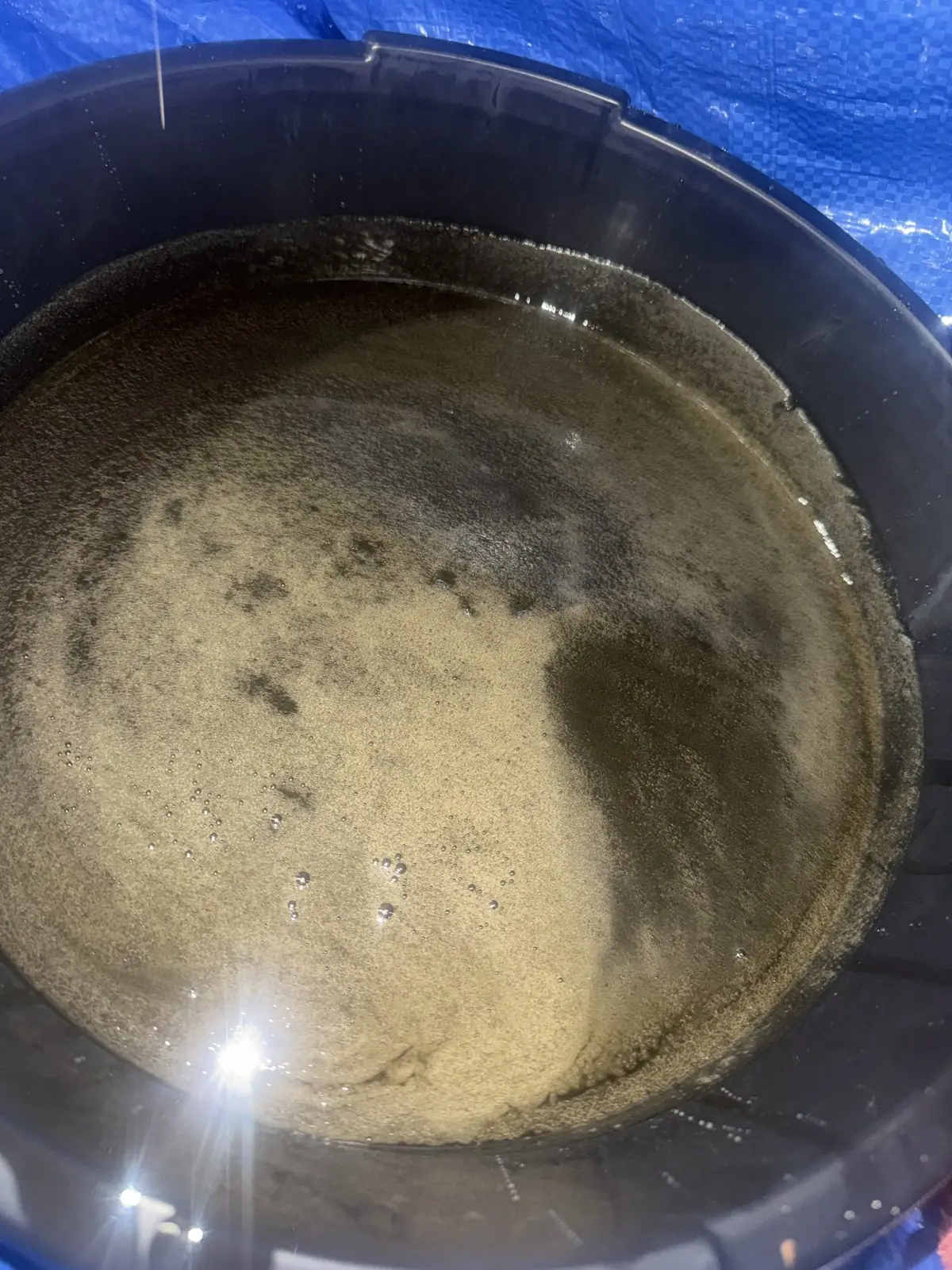
The 6.7 burns off soot with active regens. During a regen it can add a late shot of fuel, and some of it washes into the oil.7 Stop and go driving and long idles make it worse. Steady highway miles help.7
Check the dipstick between oil changes. An oil level that climbs, or oil that smells like diesel, is a reason to get it looked at. Short hops around San Jacinto and Hemet are exactly the kind of driving that feeds this problem.
What Gets Fixed Where the Truck Sits
Most of the list starts with a test, not a part. This is how each problem lines up with the mobile diesel service Mobile Mechanic San Jacinto runs.
| Problem | First Move | On Site |
|---|---|---|
| Fuel pump symptoms | Scan data and a fuel pressure test before any parts | Testing yes. A full fuel system job is quoted after the test |
| Low Fuel Pressure message | Filter condition and lift pump pressure | Yes, fuel filters are an on site job |
| Fuel leak at the filter | Find the source, check every connector | Yes for filters and connectors |
| Turbo noise or low boost | Boost, vane movement and leak checks | Testing yes. Often the actuator, not the turbo |
| EGT or NOx sensor fault | Read live sensor data | Yes, emissions sensors are on site jobs |
| Coolant in the oil | Test to confirm | No. Head gasket work needs a shop |
Before a big diesel repair, read the California diesel smog and Clean Truck Check guide too. A fuel or sensor repair can reset readiness right before a test. For a Power Stroke in San Jacinto, Hemet, Valle Vista or Winchester, call 951-633-8580 with the year and mileage ready.
Your Questions
- Has Ford fixed the CP4 problem on the 6.7?
- Partly. Ford switched to an updated RP8 pump during the 2021 model year. For 2020 to 2022 trucks with the older RP7 pump, the recall fix is a software update that adds cooling, not a new pump.3
- Which 6.7 Power Stroke years have the most problems?
- The 2011 and 2012 trucks carry the most known items, including turbo bearings and exhaust sensors. The 2020 to 2022 trucks carry the pump recall. Any year can be fine with good records, so check the history first.367
- How often should I change the fuel filters on a 6.7 Power Stroke?
- Ford says every 30,000 miles in normal use. If you tow, idle a lot or drive stop and go, it's 15,000 miles, 600 engine hours or 6 months.1
- What does a Low Fuel Pressure message mean on a Super Duty?
- Fuel pressure into the high pressure pump has dropped too low, usually from clogged filters. If you keep driving, the truck cuts power by 30%, or 50% on 2023 and newer.1
- What are some common problems with the 2020 Ford F-350 diesel?
- The big one is the CP4.2 pump recall, 24S78. 2020 trucks also fall in the federal probe into fuel filter housing leaks.23
- Should I get a used 6.7 Power Stroke inspected before I buy it?
- Yes. Ask for fuel filter records and recall status, and scan it before money changes hands. A pre-purchase inspection can be done at the seller's place.
Keep Mobile Mechanic San Jacinto on Your Google Results
Data Sources
- Ford Motor Company, response to NHTSA investigation PE24-014, November 22, 2024, accessed November 2026
- NHTSA Office of Defects Investigation, PE24-014 opening resume, secondary diesel fuel filter leak, accessed November 2026
- TFLtruck, Ford Super Duty high pressure fuel pump recall 24S78, accessed November 2026
- Motor Authority, Ford Super Duty fuel pump recall, accessed November 2026
- Kelley Blue Book, Ford recalls diesel trucks for fuel pump issue, April 2026, accessed November 2026
- NHTSA Office of Defects Investigation, RQ14-005 exhaust gas temperature sensor, accessed November 2026
- DieselHub, common 6.7 Power Stroke engine problems, accessed November 2026
- Pickup Truck Talk, Ford's 6.7 liter Power Stroke common issues and failure points, June 2026, accessed November 2026